
Whoa!
I’ve been poking at DeFi risk models and simulations for months now.
Serious gaps showed up almost immediately across many protocols.
Initially I thought protocol composability failures were the main culprit, but then I started simulating transactions end-to-end and discovered subtler failure modes that only emerge when order flow, front-running bots, and gas price volatility interact on a live mempool.
My instinct said this would be noisy, and that turned out to be true in complicated, sometimes surprising ways.
Seriously?
One trade could look fine on paper until you simulate it against real mempool activity.
If you simulate using stale state or a different RPC, you misestimate slippage and fees.
On one hand I assumed wallets already handled this; though actually most wallets only approximate the real outcomes because they lack full mempool replay or private RPC forks.
This is where transaction simulation, with accurate state reconstruction and gas-fee modeling, becomes more than a convenience — it becomes an essential risk-control instrument for serious DeFi users.
Hmm…
Okay, so check this out—simulating means recreating chain state at a precise block.
You need account balances, pending nonces, and contract storage exactly right.
If any of those differ — even slightly — your test run will miss reentrancy windows or rely on liquidity that evaporates in the real mempool under stress, and then your “safe” trade blows up at execution.
So far I’ve been using hybrid approaches: local forked nodes for deterministic replay plus a live-air simulation against a curated mempool snapshot to capture front-run dynamics, but those setups have trade-offs in cost and complexity.
Wow!
Flash loans are a great example of risks visible only in a live simulation.
On one hand an arbitrage looks profitable in isolation.
But when you replay that same order into a mempool snapshot heavy with sandwich bots and high-priority relayer traffic, the profitability evaporates, or worse, you become the sandwich victim and pay a huge gas bill for nothing.
The point is clear: tools that model only the static liquidity curves miss dynamic attack vectors that depend on ordering and latency.
I’m biased, but…
Modern wallets that integrate deep simulation reduce these common blindspots for traders.
Some wallets do this well and some do not.
Beyond that, a well-designed simulation engine should surface probabilistic outcomes, not a binary success/fail, and should attach confidence intervals to slippage and gas predictions so you can reason about tail risks.
It should also flag unusual permission requests from contracts and show a step-by-step low-level trace so you can see where funds move during a complex multicall.
Wow!
Advanced transaction simulation must handle multicalls, approvals, and stateful contract interactions.
It also needs to model gas tokens and rebate mechanisms.
A surprising complexity comes from gas price prediction: not only do you need to estimate the base fee, but you must model priority fee dynamics under volatile conditions and simulate whether miners or validators will include your transaction at a given fee level.
When builders include private relays or pay for priority inclusion, simple public mempool replays give misleading results; a hybrid model is necessary to approximate these gray areas.
Hmm…
Effective risk assessment should be layered across protocol, contract, and execution risk.
At the protocol level examine TVL, oracle design, and governance velocity.
At the contract level you want formal audits, bug-bounty history, and an understanding of how upgradability or proxy patterns could change behavior mid-life, especially for contracts that hold user funds.
Execution risk includes network congestion, RPC staleness, MEV, mempool-based attacks, and human scheduling errors — and these are the areas where simulation really earns its keep.
Whoa!
MEV is tricky, messy, and highly context-dependent on chain conditions.
A simple slippage check won’t capture the full range of miner-extracted value scenarios.
Some advanced simulation frameworks attempt to model adversarial bots by replaying their heuristics against forked blocks, but those requires careful tuning and a library of bot behaviors that keep changing.
So you need a system that updates heuristics over time and lets users inject custom bot models when they want paranoid levels of protection.
I’m not 100% sure, but…
There are trade-offs between decentralization and simulation accuracy, especially when relying on curated RPCs.
A fully decentralized approach may lack access to private mempools.
Conversely, centralized relayers and private nodes can provide richer insights but introduce trust assumptions that some users rightly reject.
The pragmatic path for many is a hybrid: default to trust-minimized checks, but allow optional enhanced simulations via trusted providers when the stakes are high.
Okay.
User experience matters greatly because complex outputs must be understandable to non-expert traders.
Show the trace, highlight risky steps, and give plain-language takeaways.
Good UX removes false senses of security by surfacing uncertainty — numbers that say “likely” with percentages and time horizons, not just green checkmarks that lull people into overconfidence.
I’m biased, but combining that with a permission-scoped signing flow and clear rollback expectations would reduce a lot of costly mistakes.
How I use a modern wallet with simulation to think like an adversary
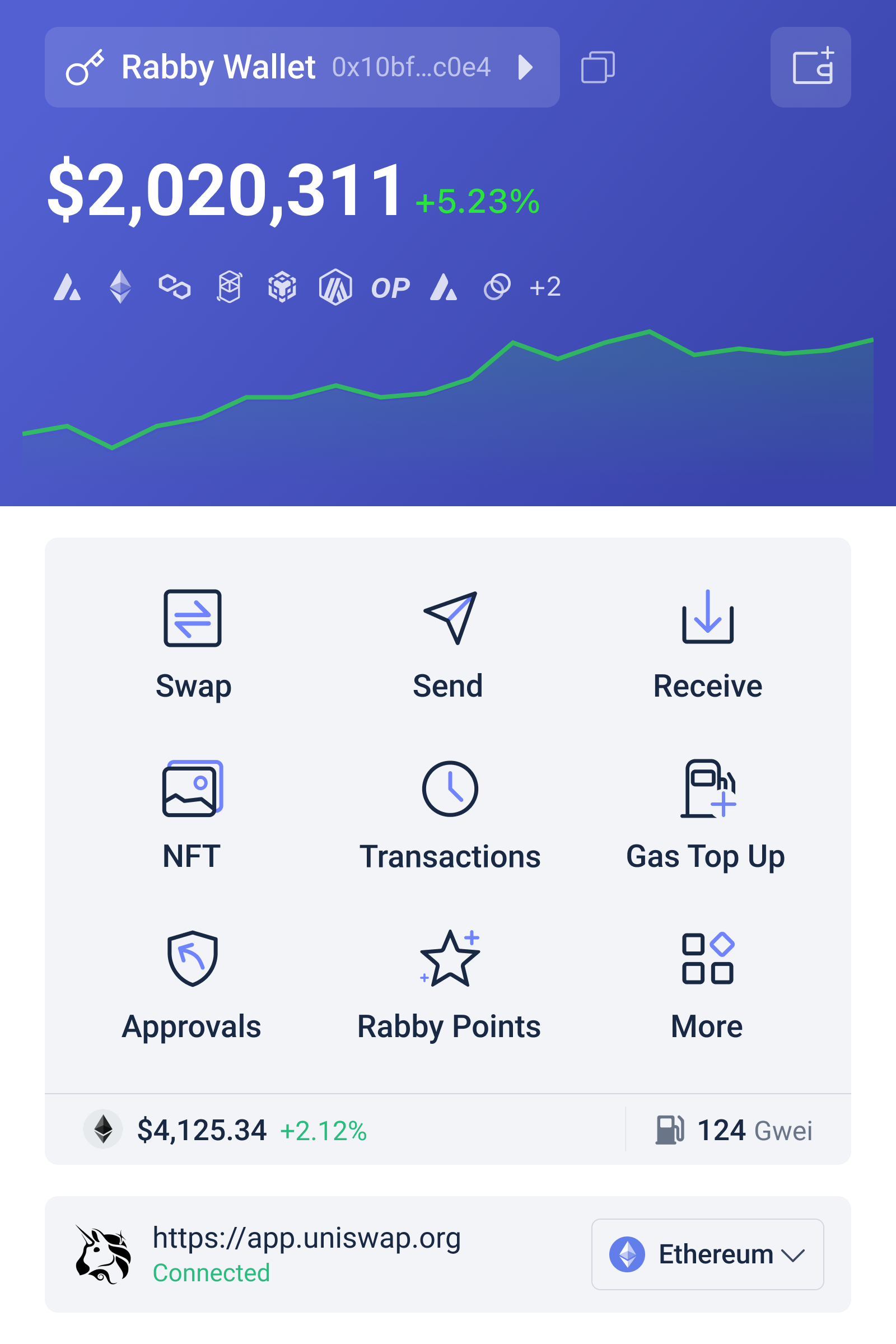
Okay, so check this out — when I’m preparing a complex swap or a multi-step leverage move I run a forked-state simulation first, then a mempool replay to watch interactions in context. I use features like account-state snapshots, low-level traces, and probabilistic slippage windows to decide whether to proceed. For a hands-on workflow, I often pair a local fork with optional enhanced checks via a trusted provider that models relayer behaviors, and when I want that in-wallet convenience I choose tools that surface all of those layers in the signing UI, like rabby wallet. There’s always somethin’ weird to catch — and sometimes that one extra check saves very very large losses.
FAQ
Q: What exactly does “simulation” add beyond a simple gas estimate?
A: A gas estimate is just one number. Simulation reconstructs state, replays contract calls, models mempool ordering and bots, and produces a distribution of outcomes. That distribution helps you understand tail risks, not just expected cost.
Q: Can simulation prevent MEV losses entirely?
A: No. It reduces exposure and helps you make informed choices, but adversaries evolve. Simulation is risk reduction, not absolute protection. Use it as part of a broader risk-management playbook.